
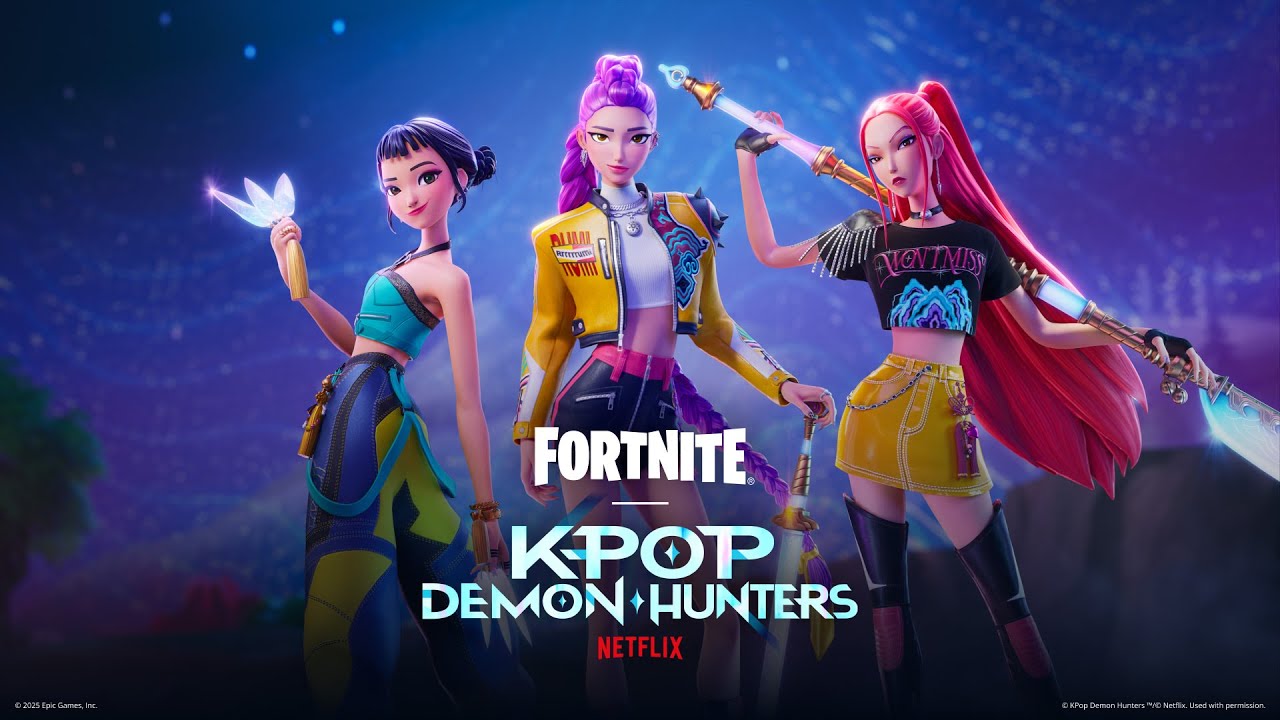
The trajectory of K-Pop Demon Hunters illustrates how new forms of entertainment IP are being built and scaled across global markets. Initially developed inside Sony Pictures Animation, the film was championed by Maggie Kang, an animator with credits at Sony and a personal family connection to South Korea. Drawing inspiration from both her cultural heritage and her background in animation, Kang envisioned a film that blended Korean folklore with the spectacle of K-pop idol culture.
Sony ultimately passed on the project, both on the film and its music integrations, opting to prioritize other franchise bets. That decision opened the door for Netflix, which acquired the rights and positioned K-Pop Demon Hunters as a global release. The results have been notable. Without relying on traditional theatrical distribution, the film has performed strongly as a standalone streaming success, drawing millions of global viewers within its first weeks of release and quickly climbing Netflix’s non-English global charts.
The film resonated because it delivered a unique cultural fusion. On one hand, it tapped into the global K-pop fandom, estimated at over 410 million people worldwide. On the other, it drew from deeply rooted Korean mythology, with demon hunting and supernatural folklore providing a universally accessible narrative framework. This duality gave the movie a distinct global hook: it was both contemporary pop spectacle and timeless myth.
From a creative standpoint, K-Pop Demon Hunters broke ground by framing action choreography through the lens of K-pop performance. Fight sequences were staged like music videos, blending combat with dance-driven spectacle. The soundtrack, featuring contributions from established idol groups, doubled as both narrative device and merchandising engine. This structure is what made the film inherently transmedia-ready, its core elements of music, myth, and visual identity could easily extend into games, merchandise, and live events.
Bringing K-Pop Demon Hunters into Fortnite is the next stage of this evolution. With more than 220 million monthly active players, Fortnite has become the entertainment industry’s most effective global distribution platform for cultural IP. Previous crossovers, from Travis Scott to Marvel to Dragon Ball, have shown that Fortnite can deliver 20–35% revenue spikes in event windows. Innovaris Labs projects that a K-Pop Demon Hunters integration could generate $150–$200 million in incremental seasonal in-game revenue.
The synergy is clear. Fortnite provides the stage, while K-Pop Demon Hunters provides a transmedia IP designed from the ground up to activate fandom. Skins, emotes, and narrative quests drawn from the movie’s mythology will resonate with Fortnite’s global Gen Z player base, while also mobilizing the hyper-engaged infrastructure of K-pop fandom. Unlike other one-off film tie-ins, K-Pop Demon Hunters has the cultural depth and community foundation to persist as an ecosystem, not just a marketing beat.
The fusion of global pop culture with interactive entertainment continues to redefine how brands, artists, and platforms connect with audiences. The latest example is the entry of K-pop demon hunters into Fortnite, Epic Games’ flagship metaverse platform. This collaboration not only signals the expanding reach of K-pop beyond music but also reflects the increasing monetization of cultural archetypes within the gaming economy.
| Element | K-Pop Demon Hunters (Film) | Fortnite Integration | Strategic Impact |
| Origin | Created by Maggie Kang at Sony, rooted in folklore and idol culture | Global Fortnite crossover event | Authentic cultural foundation with global scalability |
| Distribution | Passed by Sony, acquired by Netflix, global streaming hit | Seasonal crossover | Proves IP viability in a digital-first model |
| Archetype | Demon hunters fused with K-pop idols, choreography as combat | Skins, quests, emotes, themed battle pass | Translates mythology and pop spectacle into interactive form |
| Audience | 410M global K-pop fans; Netflix international subscriber base | 220M Fortnite MAU; 50%+ engage with events | Overlap in Gen Z, mobile-first, globally connected audiences |
| Monetization | Streaming engagement, soundtrack, merchandise | $150–$200M projected in-game sales | Builds recurring revenue beyond the film lifecycle |
K-Pop Demon Hunters is a great case study in how global IP is being built, distributed, and monetized in the new entertainment economy. Initially developed inside Sony Pictures Animation by Maggie Kang, an animator with South Korean family roots, the film was conceived as a bold fusion of folklore and pop spectacle. Kang envisioned a story that merged the fantasy archetype of demon hunters drawn from Korean mythology with the charisma and performance of K-pop idols.
Sony ultimately passed on the project and its music components, choosing to prioritize safer franchise bets. Netflix, however, recognized the opportunity and acquired the rights. The platform saw what Sony overlooked: a property that was culturally authentic, globally scalable, and transmedia-ready.
The result was a breakout streaming hit. K-Pop Demon Hunters climbed Netflix’s global charts within weeks, embraced not only by Korean audiences but also by international viewers drawn to its mix of stylized action, idol-driven energy, and mythic themes. The film proved that K-pop’s 410 million global fans would embrace a narrative that blended supernatural storytelling with the aesthetics of pop culture.
Why the Archetype Resonates
The demon hunter archetype works because it fuses two cultural forces that both scale globally.
Korean Mythology
- Folklore such as gwishin (ghosts), dokkaebi (goblins), and exorcism traditions provide timeless narrative hooks.
- These themes feel familiar across cultures, echoing Western archetypes like vampire hunters or supernatural warriors.
K-pop Idol Culture
- Many groups already lean into myth, sci-fi, or supernatural concepts, with 25–30 active groups using dark fantasy motifs and 8–10 deeply exploring demon-hunting themes.
- Fight scenes staged like dance sequences blur the line between music video and action set piece, creating a fresh visual identity.
This balance of myth and modern spectacle makes the archetype inherently adaptable. It speaks to Korean heritage while remaining accessible to global audiences, and it positions the IP for natural expansion into other media.
Why K-pop Demon Hunters Works
The movie is built on two pillars of cultural resonance:
- The Globalization of K-pop
- K-pop has a worldwide fanbase of ~410M people, with highly engaged communities that live online. This makes it uniquely positioned to jump across media formats.
- Casting idol talent in the lead roles isn’t just stunt casting, it’s a way of exporting fandom into new genres, where fans show up not only to watch but to participate in the broader mythology.
- K-pop has a worldwide fanbase of ~410M people, with highly engaged communities that live online. This makes it uniquely positioned to jump across media formats.
- Folklore Meets Pop Culture
- Demon-hunting narratives are embedded in Korea’s mythological tradition (gwishin, dokkaebi, exorcism rites), and have a universal resonance through parallels in Western fantasy and horror.
- The movie taps into this shared language of myth, reframed through modern aesthetics, high fashion, neon-lit action sequences, and choreographed combat that looks as much like a music video as a fight scene.
- Demon-hunting narratives are embedded in Korea’s mythological tradition (gwishin, dokkaebi, exorcism rites), and have a universal resonance through parallels in Western fantasy and horror.
| Element | K-pop Demon Hunters (Film) | Fortnite Integration | Strategic Impact |
| Core IP | K-pop idols as demon hunters blending myth & pop | Playable skins, themed quests, concert-style events | Extends cinematic story into interactive format |
| Audience | 410M global K-pop fans; core Gen Z & Millennial demographics | 220M Fortnite MAU; ~50% engage with crossover events | Massive overlap in digitally native, global youth |
| Cultural Hook | Folklore + idols + action spectacle | Fashion-forward skins + mythic weapons | Leverages archetypes recognizable across cultures |
| Monetization | Box office + soundtrack + merchandise | Seasonal battle pass, skins, emotes, event tie-ins | $150M–$200M projected incremental revenue |
| Long-Term Play | Franchise potential: sequels, spin-offs, TV dramas | Persistent presence in Fortnite ecosystem | Sets up a transmedia franchise beyond film |
In short: it blends a globally exportable fandom with a timeless archetype. That’s why it resonates, and why it can extend into gaming.
Why Netflix, Not Sony
Sony passed on the project because it did not fit neatly into its established animation portfolio, which is driven by franchise predictability. Netflix, on the other hand, has built its success by taking calculated risks on culturally specific content with global potential.
- Streaming is now the proving ground for IP. Netflix’s global reach gave K-Pop Demon Hunters the exposure it needed without the theatrical risk.
- K-pop fandom amplified the movie’s reach, driving soundtrack streams, choreography shares, and online conversation.
- The strong performance validated the film as a viable global franchise and laid the foundation for its move into gaming.
Why Fortnite is the Logical Next Stage
Fortnite has become the largest cultural crossover platform in entertainment, with 220 million monthly active users. Bringing K-Pop Demon Hunters into Fortnite is not just a promotional tie-in but a deliberate expansion into a persistent virtual stage.
- A new demographic bridge: Connecting Fortnite’s primarily Gen Z player base with the global K-pop fandom, which skews young, mobile-first, and digitally native.
- Merchandising synergies: Skins, emotes, and battle passes inspired by idol personas and folkloric demon-hunting lore can command premium pricing, with projected in-game revenue per user (ARPU) uplift of 12–15% during crossover seasons.
- Story-driven engagement: Thematically, demon hunters fit seamlessly into Fortnite’s ongoing mythos of multiversal battles, enhancing narrative cohesion while adding cultural texture.
- Scale: Fortnite provides unmatched global distribution to digitally native audiences.
- Interactivity: Skins, quests, and myth-inspired weapons translate the film’s aesthetic into playable content.
- Revenue: Previous crossovers such as Travis Scott, Marvel, and Dragon Ball delivered 20–35% revenue lifts. Innovaris Labs projects $150–$200 million in seasonal revenue from the K-Pop Demon Hunters integration.
- Fandom Activation: K-pop fans thrive on participation. Fortnite offers a new channel where they can embody the story and extend the narrative.
K-Pop Demon Hunters x Fortnite
| Metric | Estimate / Benchmark | Implication |
| Global K-pop fanbase | ~410M worldwide | Largest organized pop culture fandom outside sports. |
| K-pop groups with supernatural/demon themes | 25–30 (8–10 heavy use) | Ready-made archetypes for gaming adaptation. |
| Fortnite monthly active users (2025) | ~220M | Scale for distribution and activation. |
| Revenue impact of prior Fortnite crossovers | 20–35% uplift in event windows | Sets precedent for K-pop revenue lift. |
| Projected incremental revenue from K-pop demon hunters | $150M–$250M seasonal | High-margin, recurring monetization potential. |
| Fandom overlap potential | ~15–20% of Fortnite users actively engaged with K-pop | Significant cultural bridge, especially in SE Asia, LatAm, and U.S. Gen Z. |
Analyst Snapshot: From Film to Fortnite
| Element | K-Pop Demon Hunters (Film) | Fortnite Integration | Strategic Impact |
| Origin | Created by Maggie Kang, Sony animator; rooted in Korean folklore | Transmedia expansion into Fortnite | Authentic cultural grounding with global scalability |
| Distribution | Passed over by Sony, acquired by Netflix | Global seasonal crossover | Demonstrates value of streaming-first franchise seeding |
| Audience | 410M global K-pop fans; Netflix’s international base | 220M Fortnite MAU, 50%+ engage with events | Strong demographic and geographic overlap |
| Hook | Pop idols as demon hunters, blending music + myth + choreography | Skins, emotes, quests, virtual concerts | Participatory fan culture, multiplatform engagement |
| Monetization | Streaming engagement, soundtrack revenue, merchandise | Projected $150–$200M in-game seasonal sales | Recurring monetization beyond film lifecycle |
Why Netflix
Launched on Netflix on June 20, 2025 K-Pop Demon Hunters it became Netflix’s most watched movie, having reached over 266 million views, surpassing the first season of Squid Games.
Sony Pictura Animation originally announced it was in development in March 2021
Sony passed on the project, prioritizing safer, franchise-oriented bets. Netflix, meanwhile, recognized that K-Pop Demon Hunters was engineered for the streaming era:
- Streaming as Global Distribution
- Netflix has built an audience for K-content through hits like Squid Game and Kingdom. K-Pop Demon Hunters extended that momentum, leveraging K-pop fandom as a ready-made marketing engine.
- Netflix has built an audience for K-content through hits like Squid Game and Kingdom. K-Pop Demon Hunters extended that momentum, leveraging K-pop fandom as a ready-made marketing engine.
- Fandom Activation
- Netflix’s global platform gave the film reach, but it was the fans who amplified it, streaming soundtracks, sharing choreography, and pushing the film into trending status.
- Netflix’s global platform gave the film reach, but it was the fans who amplified it, streaming soundtracks, sharing choreography, and pushing the film into trending status.
- Proving Ground for IP
- By bypassing theatrical risk, Netflix tested the property’s global resonance directly with audiences. The strong results positioned the film as a viable cross-media franchise.
- By bypassing theatrical risk, Netflix tested the property’s global resonance directly with audiences. The strong results positioned the film as a viable cross-media franchise.
Why Fortnite is the Next Stage
Fortnite is no longer just a game, it is the entertainment industry’s largest stage for cultural crossovers, with ~220M monthly active users. For K-Pop Demon Hunters, Fortnite provides:
- Scale and Reach: A global platform with high crossover engagement.
- Immersive Storytelling: Skins, emotes, and myth-inspired weapons translate the film’s aesthetic into playable form.
- Revenue Multiplication: Prior IP crossovers (Travis Scott, Dragon Ball, Marvel) delivered 20–35% revenue lifts. With K-Pop Demon Hunters, Innovaris Labs projects $150M–$200M in seasonal revenue.
- Fandom Convergence: K-pop stans are already digital-native and globally networked; Fortnite gives them an interactive channel to extend their fandom.
K-Pop Demon Hunters is more than a film, it is a blueprint for how culturally authentic, fandom-driven content can scale into global franchises. Maggie Kang’s vision, once dismissed by a major studio, has now been validated by Netflix’s streaming success and extended into the interactive economy of Fortnite.
The significance lies in the model. A movie rooted in folklore and fandom becomes a global streaming hit, then migrates into gaming where it monetizes participation rather than passive viewership. This is the future of entertainment: stories that are designed from the outset to live across multiple formats, activating communities rather than just audiences.
The Future of the Franchise
The crossover into Fortnite is not the endpoint but the beginning of a larger transmedia strategy. K-Pop Demon Hunters has the building blocks to become a multi-platform franchise with expansion opportunities that include:
- Sequels and Spinoffs: Netflix is positioned to greenlight follow-ups, with potential for a series that dives deeper into the mythology.
- Concert Tie-Ins: Idol groups involved in the film could stage hybrid live and virtual concerts, blending music with narrative elements.
- Collectibles and Fashion: The film’s design aesthetic lends itself to digital and physical merchandise, from character figurines to fashion collaborations.
- Persistent Gaming Presence: A long-term Fortnite partnership or standalone game adaptation could transform the property into a sustained interactive experience.
- Cross-Market Extensions: Opportunities in webtoons, VR storytelling, and location-based events could further expand the universe.
From a strategic lens, this move highlights three significant market shifts:
- Hybrid IP models: Entertainment franchises are no longer siloed. A K-pop group can simultaneously exist as musicians, mythological characters, and interactive heroes. This multiplies monetization streams.
- Globalization of folklore: Korean mythology, once regionally bound, is now distributed at scale via platforms like Fortnite, driving not only cultural awareness but also soft-power influence.
- Next-gen fan monetization: Fans are increasingly investing in experiential participation (skins, concerts, digital collectibles) rather than just passive consumption. For Fortnite, tapping into K-pop’s hyper-engaged fan culture could generate hundreds of millions in incremental revenue over the lifecycle of these collaborations.
Closing Thoughts
K-Pop Demon Hunters is more than a stylish animated film. It is proof that culturally authentic, fandom-driven stories can transcend traditional studio pathways to become global franchises. Maggie Kang’s vision, initially passed on by a major studio, has found validation through Netflix and is now evolving inside Fortnite’s massive digital economy.
What makes K-Pop Demon Hunters significant is not just its creative vision, but the way it demonstrates how global IP can now be incubated. A culturally authentic concept that Sony dismissed as a risky bet has become a Netflix success, proving that fan-driven content can scale without theatrical release. Its extension into Fortnite highlights the new model: film as narrative seed, streaming as global distribution, and gaming as ongoing monetization engine.
At Innovaris Labs, we see K-Pop Demon Hunters as one of the clearest examples yet of how the entertainment industry is shifting toward stories designed from the outset to live across multiple formats. Its success signals the rise of transmedia-native franchises, where myth, music, and interactive participation converge to shape the future of global entertainment.
The case demonstrates three industry lessons. Streaming has become the incubator for global IP. Fandom is now the distribution engine that can replace traditional marketing spend. Gaming has emerged as the monetization layer that extends a story’s lifecycle.
The arrival of K-pop demon hunters in Fortnite is more than just a pop-cultural mashup. It’s a strategic alignment of two global entertainment forces, K-pop’s performance-driven mythology and Fortnite’s metaverse-as-a-service model. For investors and industry stakeholders, this underscores the accelerating shift toward transmedia ecosystems, where cultural exports evolve into playable, monetizable experiences.
For studios, investors, and creators, it is a signal that the next generation of franchises will not be built inside traditional pipelines, they will be born transmedia. The success of K-Pop Demon Hunters underscores how the future of entertainment is not in linear consumption but in adaptive participation.
This isn’t about “Fortnite adding more skins.” It’s about the industrialization of myth and music into playable culture. K-pop demon hunters embody a next-generation content strategy: narrative + fandom + interactivity, deployed on one of the most powerful digital stages in the world.
For industry stakeholders, the lesson is clear. The future of franchise building lies in properties that are culturally resonant, fandom-driven, and transmedia-ready from day one. K-Pop Demon Hunters is not only a case study in how to build global IP outside the traditional studio system, but also a marker for where entertainment is heading, toward stories that live across formats, cultures, and persistent worlds.
At Innovaris Labs, we view this as a case study in how cultural archetypes scale within interactive platforms, reinforcing the future of entertainment as boundaryless, participatory, and globally networked.
At Innovaris Labs, we see this as a blueprint for the next decade of global IP strategy, where cultural exports are no longer confined to stage and screen, but reborn as interactive mythologies inside persistent virtual worlds.