
Sony Pictures Entertainment put $100 million into Cosm this week, leading the company’s Series C and taking a minority stake. SPE chairman and CEO Ravi Ahuja joins the board. The money is real. But the more interesting question is what Sony is actually buying.
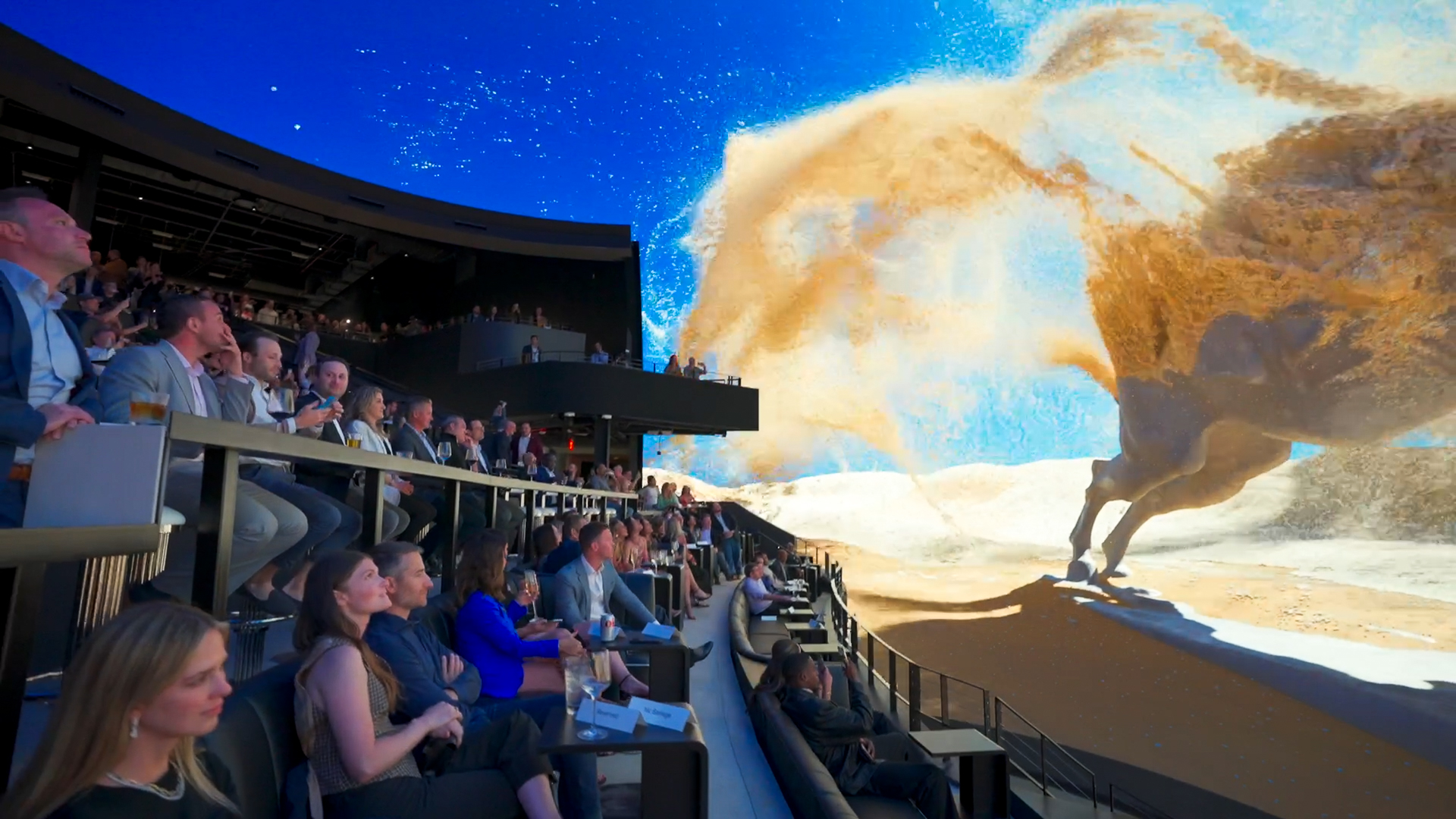
Cosm is not a streaming platform. It is not a studio. It is not a content library. It is a room, specifically an 87-foot dome wrapped in a 12K LED display, and the bet Sony is making is that the room itself is the product.
The company currently operates venues in Los Angeles, Dallas, and Atlanta, with Detroit opening in September and Cleveland early next year. International locations are coming. The format is what Cosm calls Shared Reality: a large group of people inside a dome, watching the same thing at a scale and resolution that makes the experience feel categorically different from anything a screen at home can deliver. Live sports has been the primary driver, with the FIFA World Cup, NBA Finals, UFC, and WrestleMania all running through the venues. But Cosm has also been filling non-sports hours with immersive versions of The Matrix, Willy Wonka, and Harry Potter, which is where Sony’s IP catalog starts to look like something more than a bonus.
Sony is not the first major player to see what Cosm is building. Fox, Kroenke Sports and Entertainment, and Marc Lasry were already in the cap table. Two years ago Cosm raised $250 million from a separate group of investors. The Sony round is a statement of acceleration, not discovery.
What makes this worth paying attention to as an industry move is the underlying thesis. Hollywood has spent years trying to solve the theatrical problem, the steady erosion of the argument for leaving your house to watch something. The standard responses have been bigger screens, premium formats, reclining seats, and dinner service. Cosm is making a different argument: that the value is not in the content alone, it is in the collective experience of being inside something, physically surrounded by it, with other people who chose to be there.
That is an old argument, actually. It is why live sports still command the audiences they do. Cosm is essentially taking that logic and building dedicated infrastructure around it, purpose-built for the format rather than retrofitted from a multiplex.
For Sony, the strategic read is clear enough. The studio owns IP across film, television, music, and games. Cosm’s Shared Reality technology is a new surface to extend that IP into physical space, at a scale that streaming cannot replicate and that a standard theatrical release does not fully exploit. The deal announcement uses the phrase “deepen audience engagement with the stories and worlds they love,” which is corporate language for: we want another way to monetize the franchises we already have.
The model that will define the next decade of entertainment is not the one that wins the streaming wars. It is the one that figures out what people will still leave their houses for, and builds the infrastructure to serve it. Sony just made a substantial bet on one answer to that question.
Whether Cosm can execute the expansion at speed, maintain the experience quality across new markets, and build enough programming density to keep domes full on non-event nights are the real variables. The technology works. The audience response has been strong enough to attract serious capital repeatedly. The question now is whether a collection of domes becomes a network, and whether a network becomes a platform.