
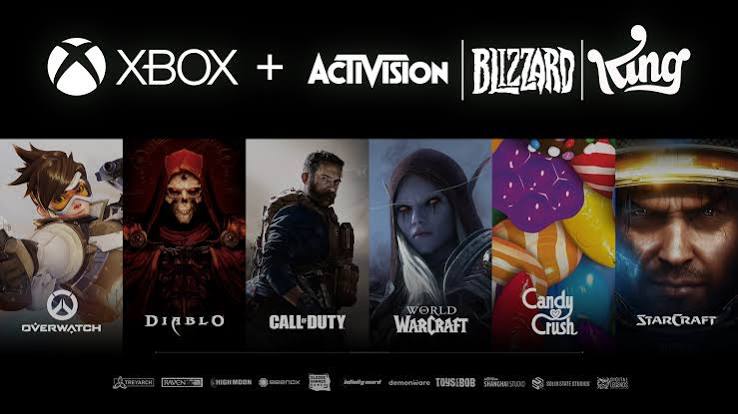
If 2022 is the year of consolidation, then the first three weeks of January serve as a litmus test for what we might expect for the year ahead. There is no better example of consolidation in the games industry than what has transpired so far in 2022, and we’re only in the third week of January.
This week saw the colossal, record-breaking acquisition of Activision Blizzard by Microsoft for $68.7 billion. Not only is this the largest acquisition ever made by Microsoft, it is also the largest “all cash” deal in history.
Microsoft is the second largest company in the world after Apple, with a valuation of $2.2 trillion. This acquisition makes Microsoft the second largest game company in the world, behind only Tencent and Sony, which had $29 billion and $25 billion in game revenue respectively in 2021. Microsoft’s Xbox division has $15.3 billion in revenue; add to that Activision Blizzard’s revenue of $8.1 billion, for a combined revenue of $23.4 billion for the year. The deal should be approved by the Department of Justice and the Federal Trade Commission and close sometime in mid 2023.
Microsoft’s Activision Blizzard acquisition far eclipses the record set only a week ago when Take-Two acquired Zynga. Prior to last week, the biggest acquisitions were Supercell at $10.2 billion (acquired by Tencent in 2016), Bethesda at $7.5 billion (acquired by Microsoft in 2021), and King at $5.9 billion (acquired by Activision in 2016).
The impact of the Activision Blizzard acquisition cannot be overstated, as it marks a significant power shift that will lead to undeniable changes in the industry going forward. The financial market seems to think so as well, with Sony shares dropping 13% on the news, losing over $20 billion in valuation in a single day. This is the largest single drop in Sony’s stock price since 2008, when the company had to recall 100,000 laptops for faulty batteries. Meanwhile, some of the remaining independent third-party publishers, such as Capcom, Square Enix, Konami, and Ubisoft, saw their stock prices jump 5-10%.
There are obvious advantages that the acquisition brings to Microsoft. As the largest third-party game publisher in the world, Activision has maintained a strong position not only in consoles but also on PC and mobile platforms, thanks to games like Destiny 2, Call of Duty: WWII, and Candy Crush. This now gives Microsoft a leading position across console, PC, and mobile gaming.
The following table shows the current breakout of Activision Blizzard’s revenue by platform:
| Activision | % | 2021 Q3 | 2021* Estimate |
|---|---|---|---|
| Video Game Consoles | 25% | $518 | $2,224.75 |
| PC-Related Content | 28% | $580 | $2,491.72 |
| Mobile and Ancillary (including non-platform-specific game-related revenues) | 40% | $828 | $3,559.60 |
| Other: (European distribution and esports) | 7% | $145 | $622.93 |
| Source: M2 Insights | 100% | $2,070 | $8,899.00 |
In Activision’s last quarterly statement from November 2021, the company stated it had 390 million monthly active users (MAUs), down from its high in early 2021 of 435 million users. The King division, with Candy Crush, makes up the bulk of active users at 63% of the total, while Activision is at 31% and Blizzard at 7%.

According to the quarterly report, monthly active users across Call of Duty titles grew 40% year-over-year and have tripled since 2019, reaching 150 million in the first quarter of 2021. The company’s Blizzard segment revenue grew 7%, bolstered by the World of Warcraft: Shadowlands expansion, and had 27 million monthly active users in the quarter.
The King segment, with 258 million monthly active users, was up 22% thanks to the popular Candy Crush game. King’s advertising revenue was also up 70%.
Activision’s Call of Duty franchise has been key to the company’s success, particularly the free-to-play titles, including Call of Duty: Warzone and Call of Duty: Mobile, with in-game purchases for various PC and console versions growing 60%.
Mobile
With the Activision Blizzard acquisition, Microsoft becomes the recipient of a strong library of mobile games that includes Candy Crush and Call of Duty: Mobile. Call of Duty: Mobile launched in October 2019 and has been downloaded more than 450 million times, while Candy Crush has over 2.7 billion downloads.
Candy Crush was initially launched in 2012 by King, and Activision acquired King for $5.9 billion in early 2016. Candy Crush made over $1 billion in in-game purchases in 2020 alone. Activision’s King product segment has grown 22% year-over-year, and its advertising business has grown 60%, while Call of Duty: Mobile has reached lifetime earnings of $1 billion.
In October 2021, Activision acquired Barcelona-based mobile game company Digital Legends for an undisclosed amount. Digital Legends specializes in mobile shooters and has published Afterpulse and The Respawnables. It was noted at the time of the purchase that Digital Legends would be working on a new, yet-to-be-announced Call of Duty mobile game.
Microsoft CEO Satya Nadella had this to say about mobile:
“Mobile is the largest segment in gaming, with nearly 95% of all players globally enjoying games on mobile. Through great teams and great technology, Microsoft and Activision Blizzard will empower players to enjoy the most-immersive franchises, like “Halo” and “Warcraft,” virtually anywhere they want. And with games like “Candy Crush,” Activision Blizzard’s mobile business represents a significant presence and opportunity for Microsoft in this fast-growing segment.”
Esports
Another area where Microsoft is now positioned to lead is esports, thanks to the presence Activision has built up over the years. Activision Blizzard Esports has been a staple in the esports space since 2015, when it launched its first competitive gaming event.
In 2018, Activision launched the Overwatch League (OWL), followed by the Call of Duty League (CDL) in 2020. Aside from these two leagues, there is also Hearthstone Masters and Grandmasters, the World of Warcraft Mythic Dungeon International, and the Arena World Championship. Esports viewership of the Call of Duty League reached 11.9 million in 2021, with Overwatch League viewership rising 57%.
The pandemic wreaked havoc on live in-person esports events, but Activision has recently started up its esports activities again. The CDL season started on Friday in Arlington, Texas, and the OWL season is set to start in-person events this April.
Part of Activision’s esports revenue model is selling franchises, and the company sold the first Overwatch League franchises for $20 million each back in 2018. Call of Duty League franchises sold for $25 million each. With 12 teams in the OWL, expansion slots reportedly went for $30 to $60 million each.
Beyond its games as esports franchises, Activision acquired Major League Gaming in 2015 with the goal of making the platform the “ESPN of Esports.”
In early 2020, Activision inked a deal with Alphabet’s YouTube to be the exclusive live broadcast platform for all of Activision’s esports properties. The deal, valued at $160 million over three years, also included incentive provisions for ad sales and viewing targets. Activision also agreed to use Google Cloud as its cloud computing service. Now, with the Microsoft acquisition, it stands to reason that Activision will move to Azure, Microsoft’s cloud service.
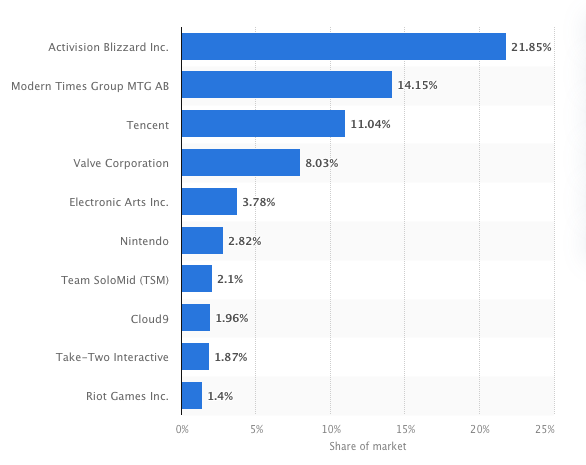
Statista lists Activision as having the largest share in esports at 21.8%, meaning that position will now belong to Microsoft.
Activision does not break out esports revenue but instead allocates it to the “Other” operating segment, which also includes the company’s European distribution business, totaling $687 million in 2020. The “Other” segment increased 82% between 2016 and 2019, and we estimate Activision’s esports revenue to be between $300 and $400 million.
In 2021, Activision Blizzard was plagued by claims of sexual and racial discrimination (read more here). As a result of the fallout, both the Overwatch and Call of Duty Leagues have seen a number of key sponsors distance themselves from the company, including State Farm, Coca-Cola, Kellogg, and ASTRO Gaming. Hopefully, under Microsoft’s guidance, these sponsors will return.
For its part, Microsoft acquired Smash.gg back in 2020. Smash.gg is a platform that enables amateur players to run their own esports tournaments. Microsoft also relaunched Halo into the competitive circuit, holding a series of events back in December 2021.
Activision’s esports business model differs significantly from Microsoft’s. Activision charges team owners a licensing fee, whereas Microsoft has followed a microtransaction model with Halo Infinite, similar to Fortnite, where consumers can buy in-game virtual products such as customized armor.
Cloud Gaming
Once the deal goes through, it’s reasonable to assume Activision’s products will move from Google Cloud, where most of the games have been hosted since the 2018 YouTube partnership, to Microsoft Azure. The original partnership with Google was for three years, meaning the agreement expires in 2023, around when the Microsoft acquisition would take effect.
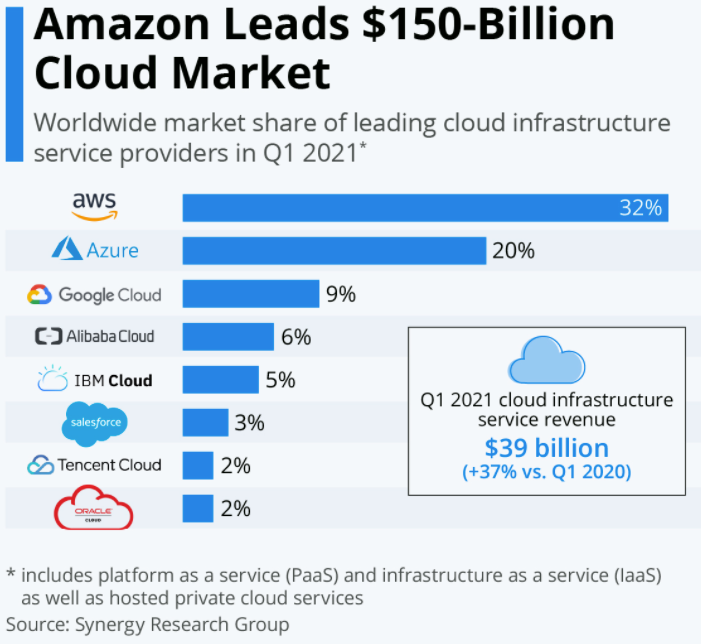
Owning about 20% of the $150 billion cloud services market, Microsoft’s Azure is the second-largest cloud service in the world. Only Amazon Web Services is bigger, with about 34% of the market. Google Cloud comes in third at just 9%.
Once Microsoft acquires a company, it typically moves them onto Azure servers. For example, Microsoft acquired Minecraft developer Mojang in 2014 and has slowly moved the game over to Azure, with insiders saying the transition was finally completed in 2020. The same migration will likely apply to the Activision Blizzard portfolio of games.
Additionally, this squarely puts Microsoft’s Xbox Game Pass ahead of any other company in cloud gaming. Xbox Game Pass launched in 2017 and currently has 25 million subscribers, up from 15 million in 2020. Microsoft can now tap into Activision’s 390 million active monthly users across 190 countries, making Xbox Game Pass an even more compelling proposition for consumers.
The main competitors in cloud gaming include Nvidia’s GeForce Now with 12 million subscribers, Electronic Arts with 13 million subscribers as of the beginning of 2021, Sony’s PlayStation Now with 47 million, and Nintendo Switch Online with 32 million.
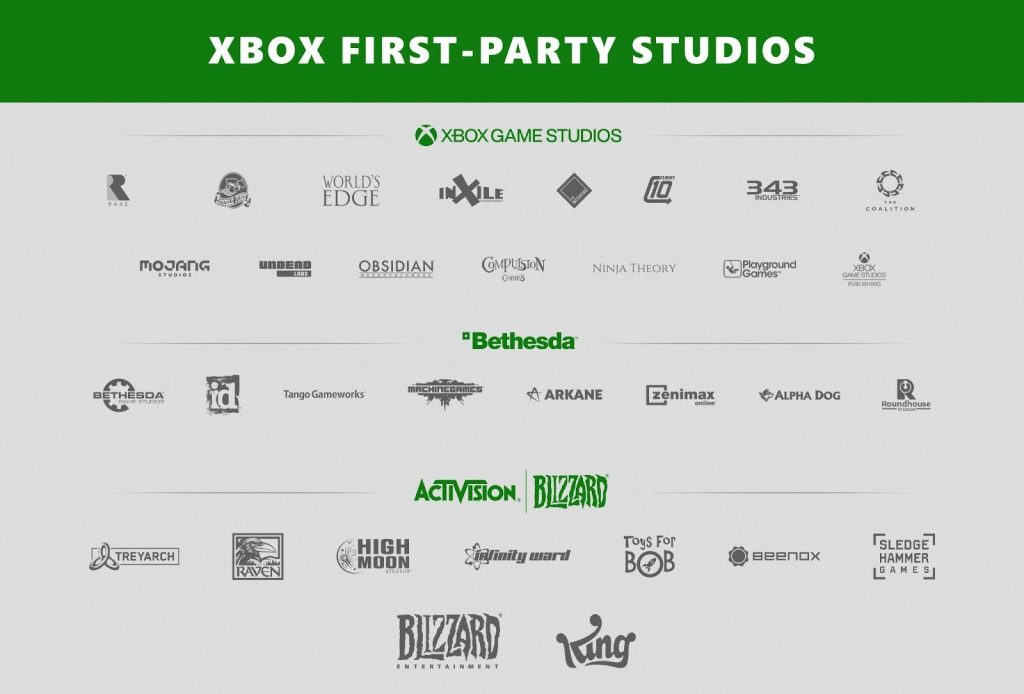
In Microsoft’s announcement of the acquisition, the company stated: “The acquisition also bolsters Microsoft’s Game Pass portfolio with plans to launch Activision Blizzard games into Game Pass, which has reached a new milestone of over 25 million subscribers. With Activision Blizzard’s nearly 400 million monthly active players in 190 countries and three billion-dollar franchises, this acquisition will make Game Pass one of the most compelling and diverse lineups of gaming content in the industry. Upon close, Microsoft will have 30 internal game development studios, along with additional publishing and esports production capabilities.”
The Studios
With the Activision acquisition, Microsoft will have paid $80 billion to own 30 internal studios, not including what it has already invested in Xbox itself. It should be a clear alarm bell for competitors that Microsoft is looking to reshape the games industry landscape.
Let’s take a look at the acquisitions Microsoft has made to date.
| Date | Company | Price | Studios Owned | Products |
|---|---|---|---|---|
| 1/18/22 | Activision Blizzard | $68.7 billion | Blizzard, King, Treyarch, Raven, High Moon, Infinity Ward, Toys for Bob, Beenox, Sledgehammer | Call of Duty, Overwatch, Diablo, World of Warcraft, Spyro the Dragon, Crash Bandicoot, Tony Hawk series, Candy Crush |
| 9/21/21 | Zenimax Media | $7.5 billion | Bethesda Game Studios, id Software, Tango Gameworks, Arkane Studios, Zenimax Online, Alpha Dog Games, Roundhouse Studios, MachineGames | Dishonored, Deathloop, Starfield, Fallout, The Elder Scrolls, Wolfenstein, Doom, Quake, The Evil Within, Ghostwire: Tokyo, Prey, The Elder Scrolls Online |
| 6/9/19 | Double Fine Productions | – | – | Psychonauts 2 |
| 11/10/18 | Obsidian Entertainment | – | – | The Outer Worlds, Avowed |
| 11/10/18 | inXile Entertainment | – | – | Wasteland 3 |
| 6/10/18 | Ninja Theory | – | – | Heavenly Sword, DmC: Devil May Cry, Disney Infinity, Hellblade: Senua’s Sacrifice |
| 6/10/18 | Playground Games | – | – | Forza Horizon, Forza Motorsport |
| 6/10/18 | Undead Labs | – | – | State of Decay |
| 6/10/18 | Compulsion Games | – | – | Contrast, We Happy Few |
| – | World’s Edge | – | – | – |
| 9/15/14 | Mojang | $2.5 billion | – | Minecraft and Minecraft Dungeons |
| 2010 | The Coalition (acquired from Epic Games) | – | – | Gears of War |
| 2007 | 343 Industries | First party | – | Halo |
| 2002 | Rare | $375 million | – | GoldenEye 007, Perfect Dark, Banjo-Kazooie, Viva Piñata, Sea of Thieves, and Battletoads |
| 2001 | Turn 10 Studios | First party | – | Forza Motorsport |
| 2000 | Xbox Game Studio Publishing | First party | – | – |
| Source: M2 Insights |
Metaverse
When it comes to immersive technologies, Microsoft has been an early leader for years, launching the HoloLens in February 2016. Given the price of the HoloLens (base price: $3,500), it has been positioned primarily as an enterprise-level headset. Still, a consumer initiative could be right around the corner, playing perfectly into Microsoft’s expanding move toward the metaverse.
At Microsoft’s Ignite Conference in March 2021, the company announced Mesh, a mixed-reality platform that enables shared immersive experiences combining both the virtual and physical worlds. Built on Azure, Mesh takes advantage of hand and eye tracking, holograms, AI, and 3D models.
Again, during Microsoft’s quarterly earnings call in April of last year, Satya Nadella, chairman and CEO of Microsoft, said, “As the virtual and physical worlds converge, the metaverse… is emerging as a first-class platform.” He noted that Microsoft’s gaming communities, like Minecraft and its then-140 million monthly users, could grow into huge commercial marketplaces “as games evolve into metaverse economies.”
Then, at Microsoft’s Ignite Fall event in November 2021, Nadella went into more detail about how the company is positioning itself for the metaverse with a comprehensive set of services and technologies that includes Microsoft Teams, HoloLens, Azure, and more.
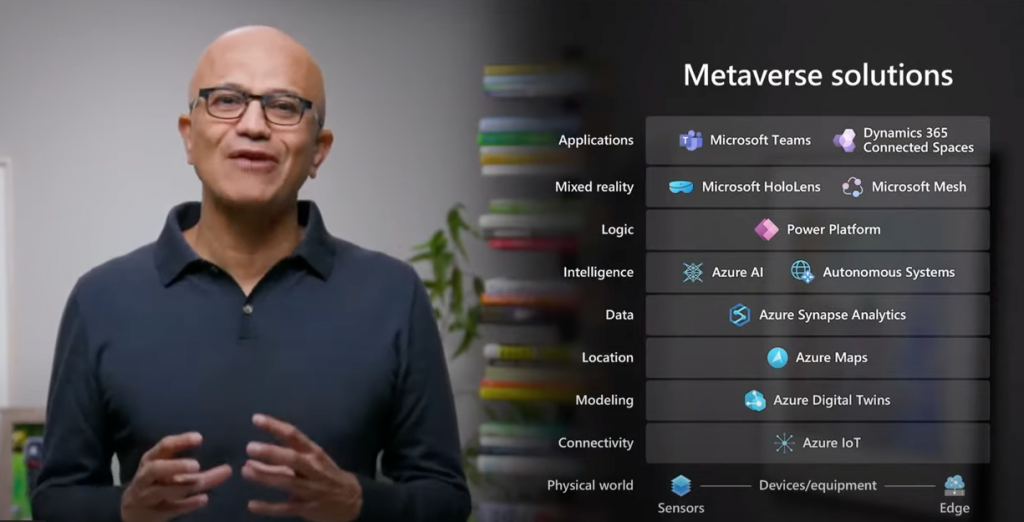
And let’s not forget that in late 2017, Microsoft acquired the remnants of AltspaceVR. At the time, Microsoft was looking to combine real-time experiences with an immersive presence, which has since become central to how the company defines its metaverse strategy.
We believe Microsoft’s biggest impetus for the Activision acquisition is centered on the metaverse. In the company’s announcement of the deal, Satya Nadella, chairman and CEO of Microsoft, commented:
“This acquisition will accelerate the growth in Microsoft’s gaming business across mobile, PC, console and cloud and will provide building blocks for the metaverse.”
“Gaming is the most dynamic and exciting category in entertainment across all platforms today and will play a key role in the development of metaverse platforms. We’re investing deeply in world-class content, community and the cloud to usher in a new era of gaming that puts players and creators first and makes gaming safe, inclusive and accessible to all.”
Activision’s biggest games are already multiplayer, and the company has been running in-game microtransactions for over 22 years, dating back to when it first sold two virtual pets in World of Warcraft for $10 each.
In 2020, Activision Blizzard generated $5.74 billion through microtransactions, downloadable content, subscriptions, and licensing royalties. In the company’s latest Q3 2021 report, total revenue from microtransactions reached $1.2 billion for the quarter, or 62% of total revenue ($1.9 billion).
Activision Blizzard fits perfectly into Microsoft’s larger metaverse vision. The company is expert at multiplayer and microtransactions and has a solid foothold across PC, console, and mobile.
Building a Strong Culture
Activision has been fraught with employee unrest, as rampant workplace discrimination and sexual harassment investigations have plagued the company. Raven Software has been on strike for over five weeks, and Activision employees have established a union called the ABK Workers Alliance. Activision CEO Bobby Kotick has been running the company for close to 30 years, and rumors of discrimination and harassment have been known by anyone working in the industry for years.
As reported by Bloomberg, Activision was apparently hoping to find a different buyer and had been talking with Meta as well as at least one other company. Kotick was likely looking for a buyer that would support him staying on to lead the group; however, with the Microsoft deal, it has already been stated that Kotick will stay until the deal is finalized in early 2023, but is then expected to exit the company.
“It’s critical for Activision Blizzard to drive forward on its renewed cultural commitments,” he said, adding, “the success of this acquisition will depend on it.”
California’s Department of Fair Employment and Housing sued the video game giant over allegations of widespread harassment and discrimination. Then, in November, the Wall Street Journal reported that Activision CEO Bobby Kotick knew about sexual misconduct allegations within the company for years. Kotick is expected to step down from his role at Activision when the deal with Microsoft closes, according to media reports.
What We Think
If the Activision acquisition goes through, it will reshape the games industry and likely trigger further waves of consolidation. Expect more acquisitions, and more tools for the winners to consolidate their advantage.
Sony’s 13% stock drop on the news is the clearest signal of how the market is reading this deal. It’s not just about losing exclusivity leverage on a handful of Call of Duty titles down the road; it’s a recognition that Microsoft now has the scale, the cloud infrastructure, and the first-party content library to compete on every front at once: console, PC, mobile, and cloud streaming. Sony has no mobile business to speak of and no cloud platform on the level of Azure. That gap just got a lot harder to close.
This deal also has to be read through the DOJ and FTC review it will face over the next year. Regulators have shown a growing appetite for scrutinizing Big Tech acquisitions, and a $68.7 billion all-cash purchase of the industry’s largest third-party publisher is about as large a target as they come. Expect the review to focus heavily on Call of Duty’s place in the console ecosystem and on what Microsoft’s growing stable of first-party studios means for competition. We think the deal ultimately closes, but not without a fight, and not without concessions.
The Activision Blizzard culture crisis is the wild card here. Kotick’s expected departure and the ongoing union effort at Raven Software mean Microsoft is inheriting a workforce in open revolt against leadership, not just a portfolio of franchises. How Microsoft handles that transition, whether it moves quickly to address the DFEH allegations and rebuild trust with employees, will shape whether this acquisition is remembered as a strategic masterstroke or a costly distraction.